
Denver to Bear Lake in StanVan: Snow, Smoke, Flaming Gorge, and Forgotten Bikes
This is the first post on StanWilds, so a quick introduction is probably in order.
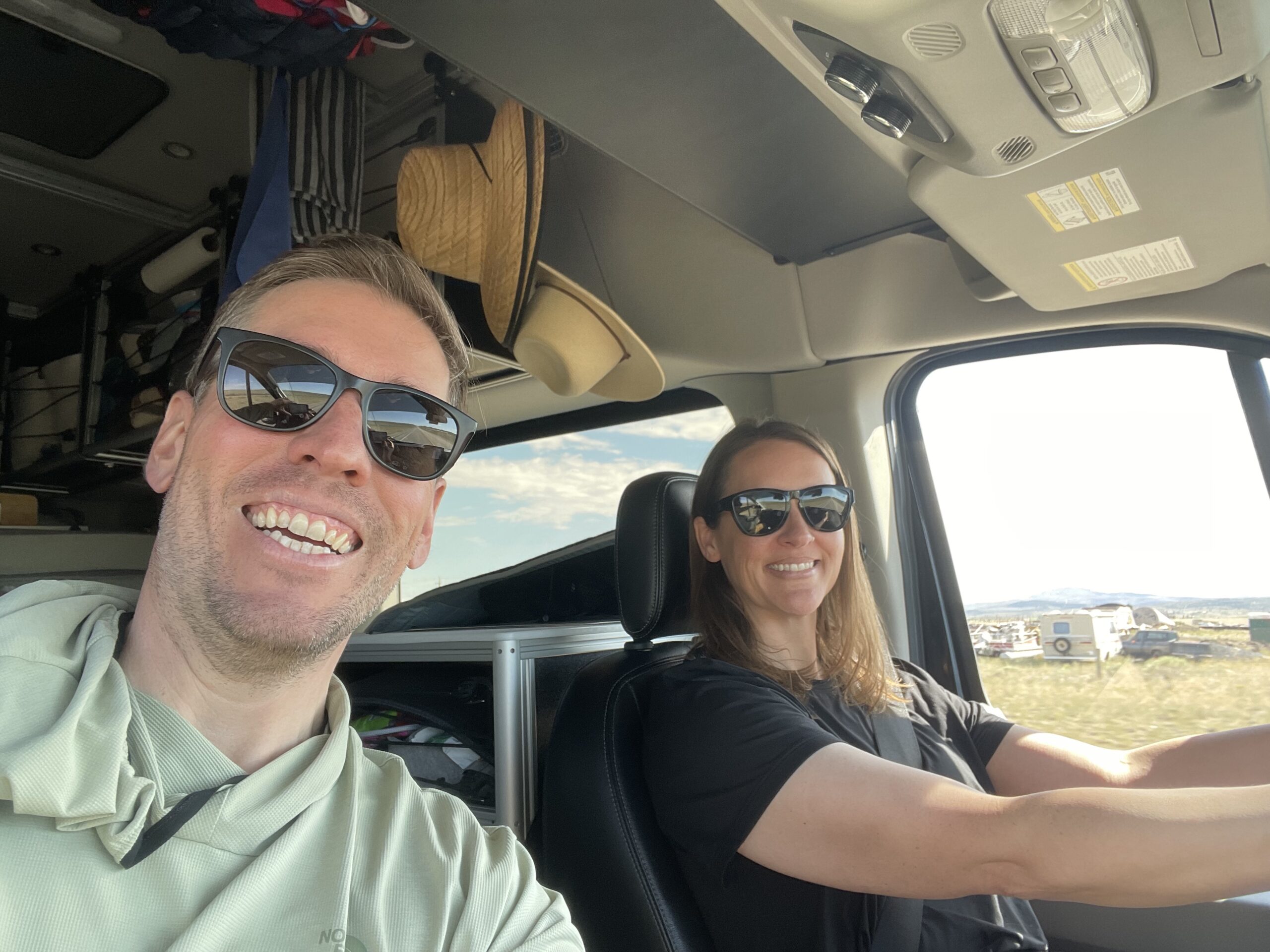
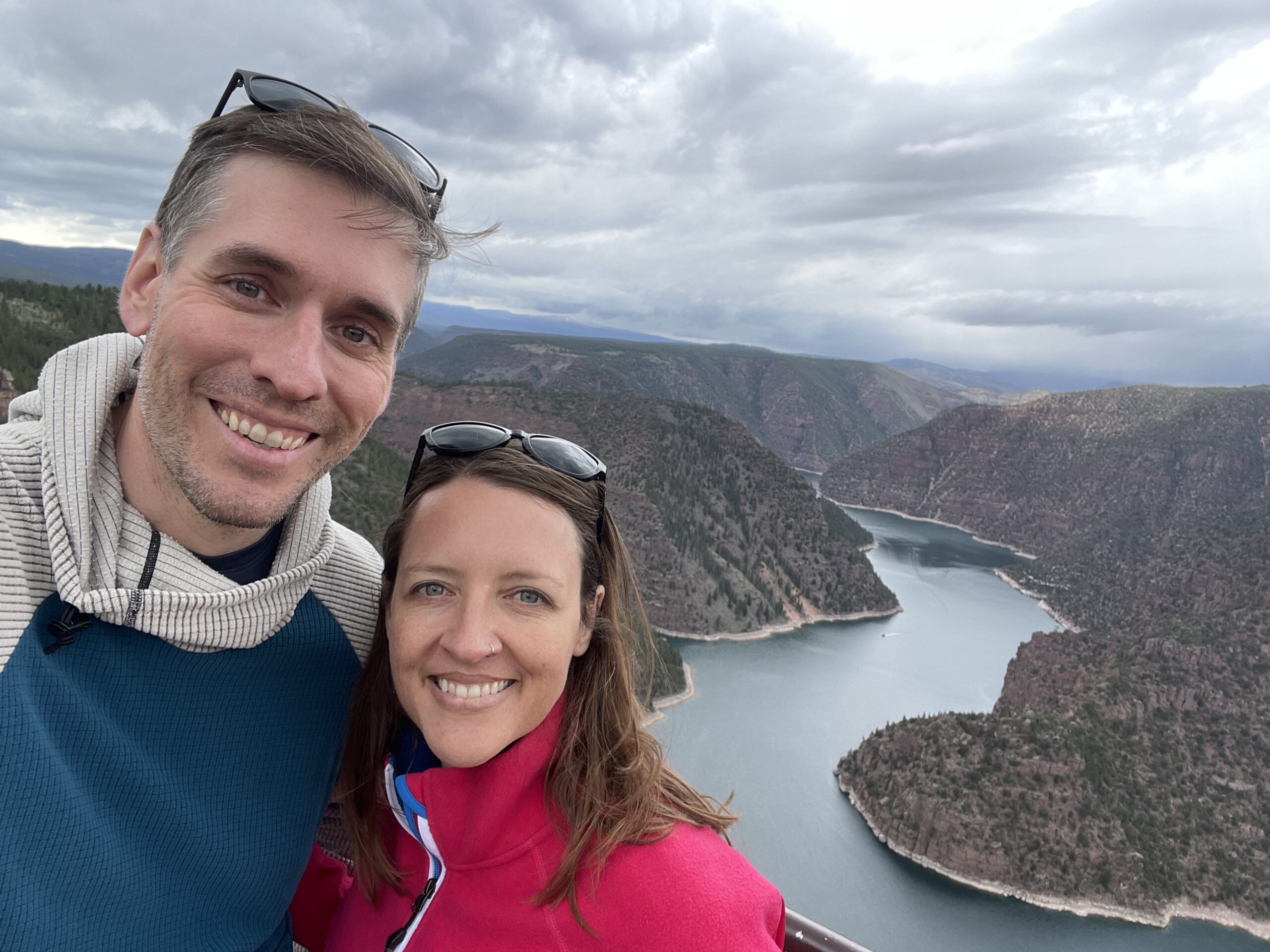
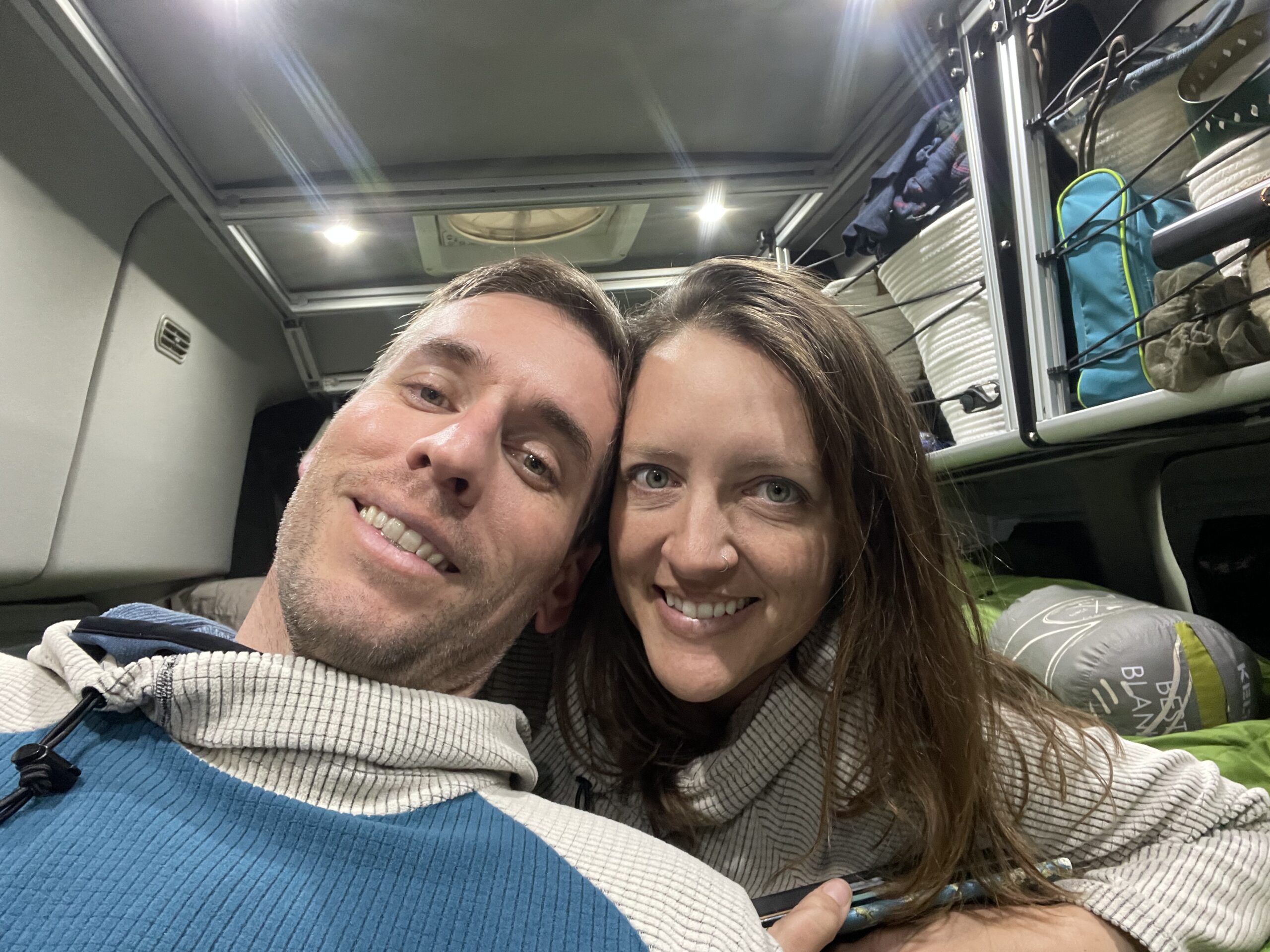
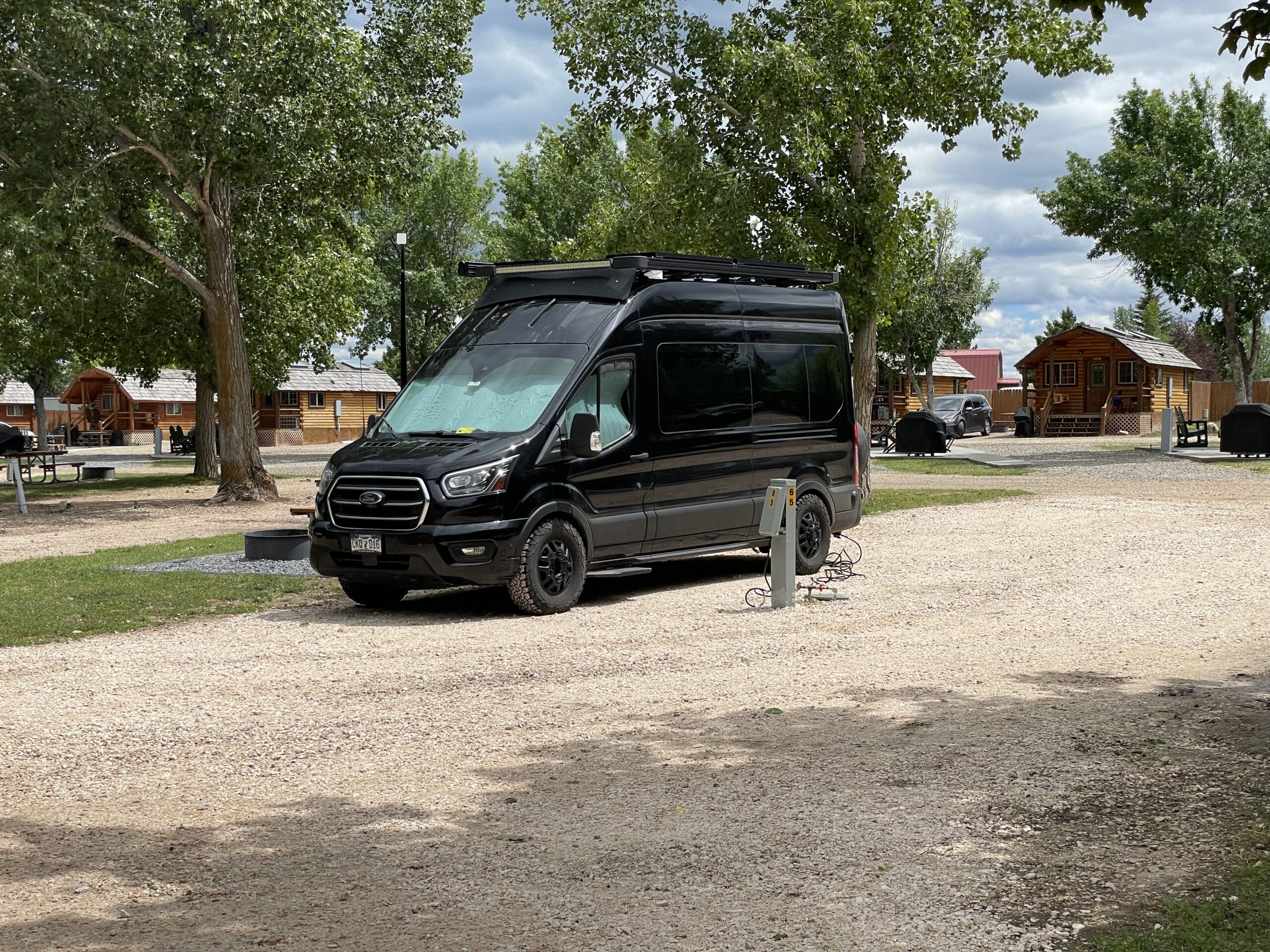
StanWilds is us: Stacy and Dan. Together, we are often “Stan,” and when we travel, we travel in StanVan. The goal is pretty simple: get outside, see weird and beautiful places, figure out what works in the van, and be honest about what absolutely does not go according to plan.
Which brings us to the first lesson of this trip: if you specifically plan to bring bikes so you can test the bike rack on the van, it helps to actually put the bikes on the bike rack before driving away.
We left Denver on Saturday, June 27, 2026, for a week-long July 4th road trip through Wyoming, Utah, and Idaho. The first three days would take us from home to Bear Lake Marina in Utah, by way of the Snowy Range, Saratoga, Flaming Gorge, Sheep Creek Canyon, and a lot of weather that could not decide what season it wanted to be.
It was beautiful. It was smoky. It was cold. It involved hot springs, leftover pizza, a new Starlink Mini, a new portable power station, surprise snow on nearby mountains, a bike-rack false start, and ramen that tried to kill us.
Day 1: Denver to the Snowy Range, Saratoga, and Bottle Creek Campground
We started the trip with the usual van departure choreography: packing, checking, moving things around, remembering last-minute items, and trying not to block the alley longer than necessary.
At some point during that shuffle, our neighbor needed to get out. We scrambled to move, got ourselves loaded, pulled away, drove a few minutes to a gas station to top off the tank, and then realized something important.
The bikes were still at home.
Not hidden. Not forgotten in a garage corner. Just fully not attached to the bike rack that we had explicitly planned to test on this trip.
This is the kind of thing that makes van travel humbling immediately. You can have maps downloaded, meals prepped, gear lists made, and a full route planned across multiple states. Then you can still forget the large, obvious objects you planned the trip around testing.
Thankfully, we were only a few minutes from home. So instead of turning it into a week-long joke about the bikes we did not bring, we turned around, went back, loaded them properly, and then restarted the trip with our actual bikes attached to the actual bike rack.
Advanced travel tip: the best time to realize you forgot your bikes is before you leave the metro area.
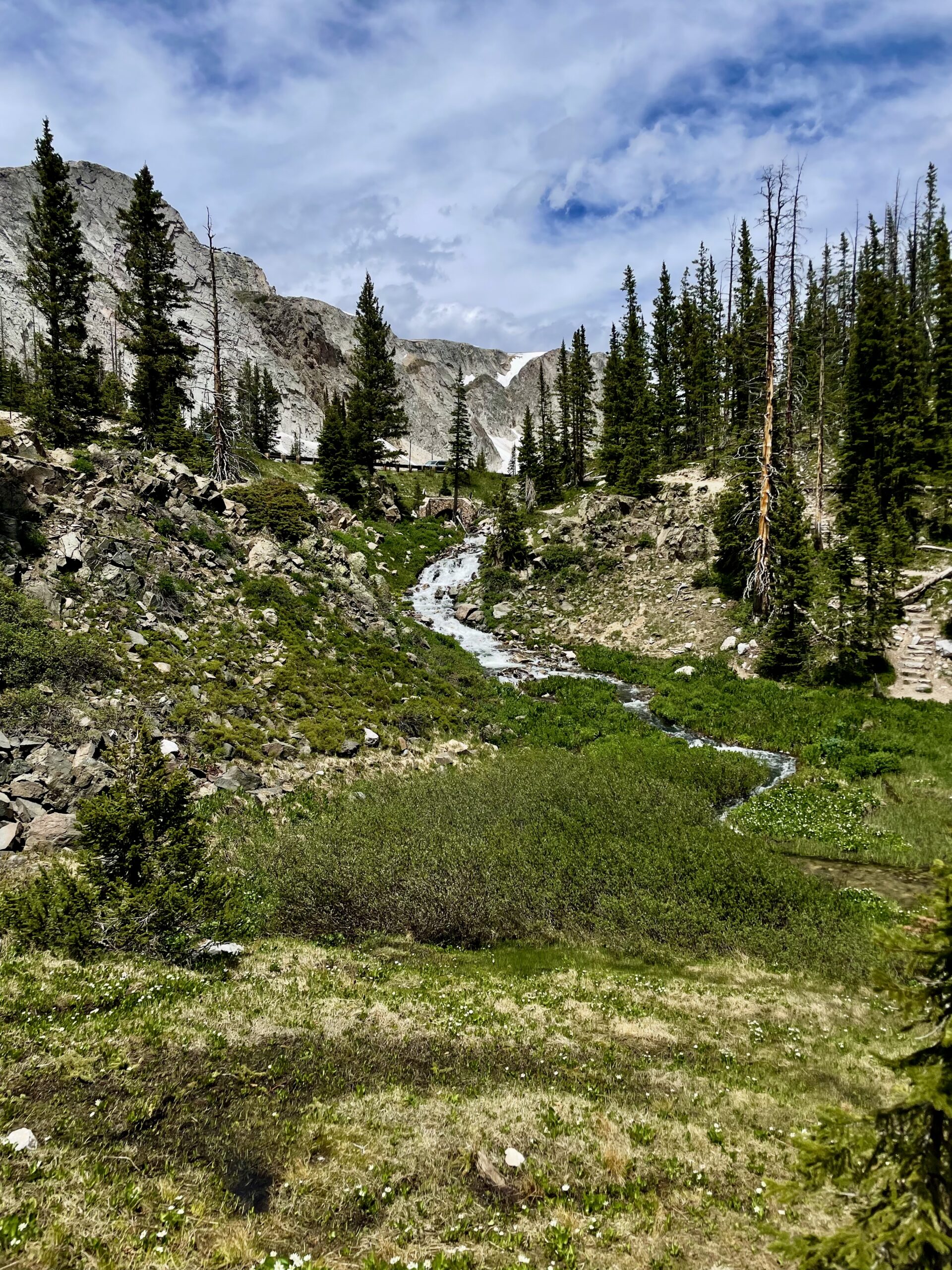
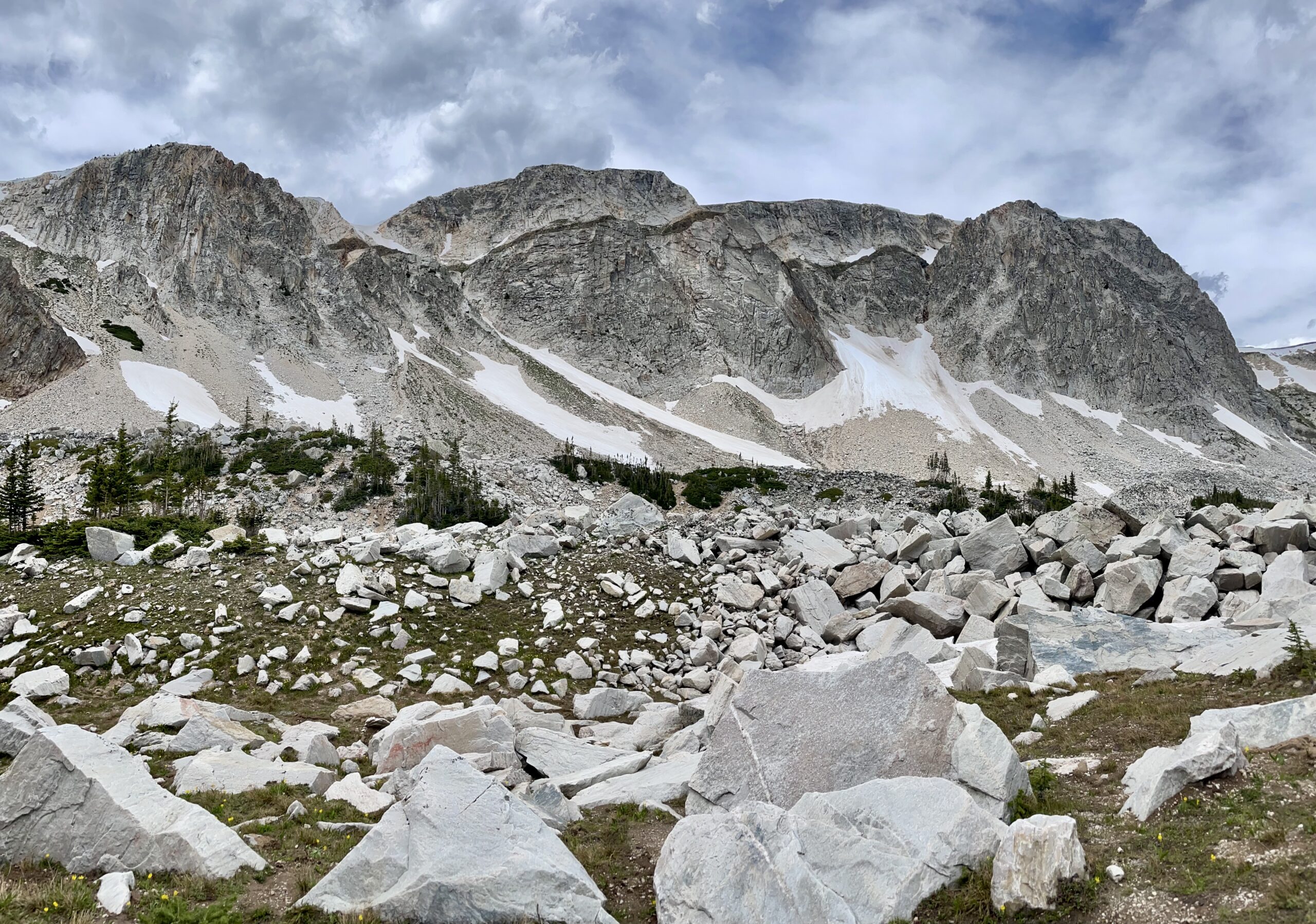
From Denver, we headed north and west toward Wyoming. Other than gas and bathroom stops, our first real destination was Lake Marie in the Snowy Range. If you are looking for a scenic first-day escape from Denver that immediately feels like you have left normal life behind, the Snowy Range delivers. Lake Marie sits in that high-country zone where the air cools down, the views open up, and a short hike feels like a reset button.
It also became our first real-world Starlink test almost immediately.
When we arrived, we saw a sign saying the area required a $5 day-use fee. Good thing to know ahead of time. We, of course, had not figured that out ahead of time. So we started scrambling around for cash and found that we had nothing smaller than a $20. The payment setup was the classic cash-in-an-envelope-and-drop-it-in-a-box system, which meant no change.
Luckily, there was a mobile payment option.
Less luckily, Verizon had no coverage in the area for several miles in any direction.
Enter Starlink.
We set up the Starlink Mini, got connected, and were able to pay the day-use fee remotely. We still ended up with a note on the van reminding us to pay, but we suspect the National Forest personnel also did not have a connection to verify the online payment against our license plate. Either way, it was a very practical first test: not glamorous, not cinematic, just “we need internet right now to avoid overpaying by $15 or accidentally not paying a fee.”
We did a short hike around the Lake Marie area, stretched our legs, took in the alpine scenery, and officially shifted from “did we remember everything this time?” mode into “we are actually on a trip” mode.
From there, we continued to Saratoga, Wyoming, for a stop at Hobo Hot Springs. This was one of the no-dog advantages of the trip. On past travel plans, dog logistics can rule out stops like hot springs, visitor centers, museums, and caves. For this trip, our dog was staying home, which opened up the itinerary quite a bit. Hobo Hot Springs made for an easy soak stop and a good transition between the driving day and camp.
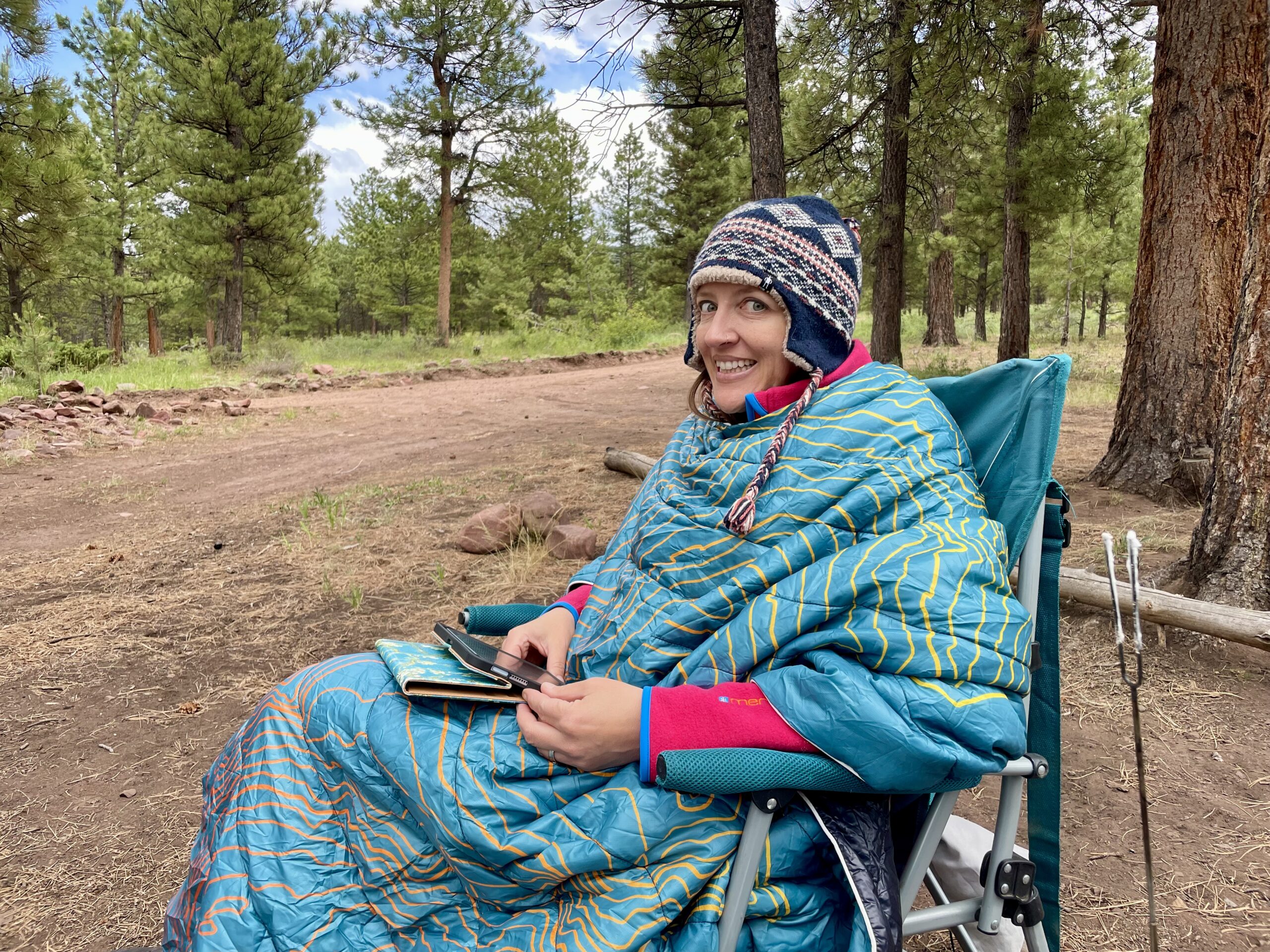
That night, we pulled into Bottle Creek Campground, a National Forest campground. The site gave us the simple camp setup we wanted for the first night, but the air was noticeably smoky from fires in Utah and northern Colorado. It gave the evening that strange wildfire-season look: filtered light, muted distance, and the constant reminder that Western summer travel increasingly comes with smoke as part of the planning equation.
Dinner was one of our better van-meal decisions: chicken we had pre-marinated at home in a vacuum-sealed bag, cooked with Knorr herb and butter rice. Nothing fancy, but exactly the kind of meal that feels like a win after a long departure day. Pre-marinated protein plus a simple pantry side is now firmly in the “do this again” category.
Also in the food rotation: leftover pizza from the night before we left. We had ordered pizza at home before the trip and brought the leftovers along, which turned into lunches and snacks for the first few days. Is leftover pizza a gourmet vanlife meal strategy? No. Is it extremely practical? Absolutely.
Testing the New Power Setup
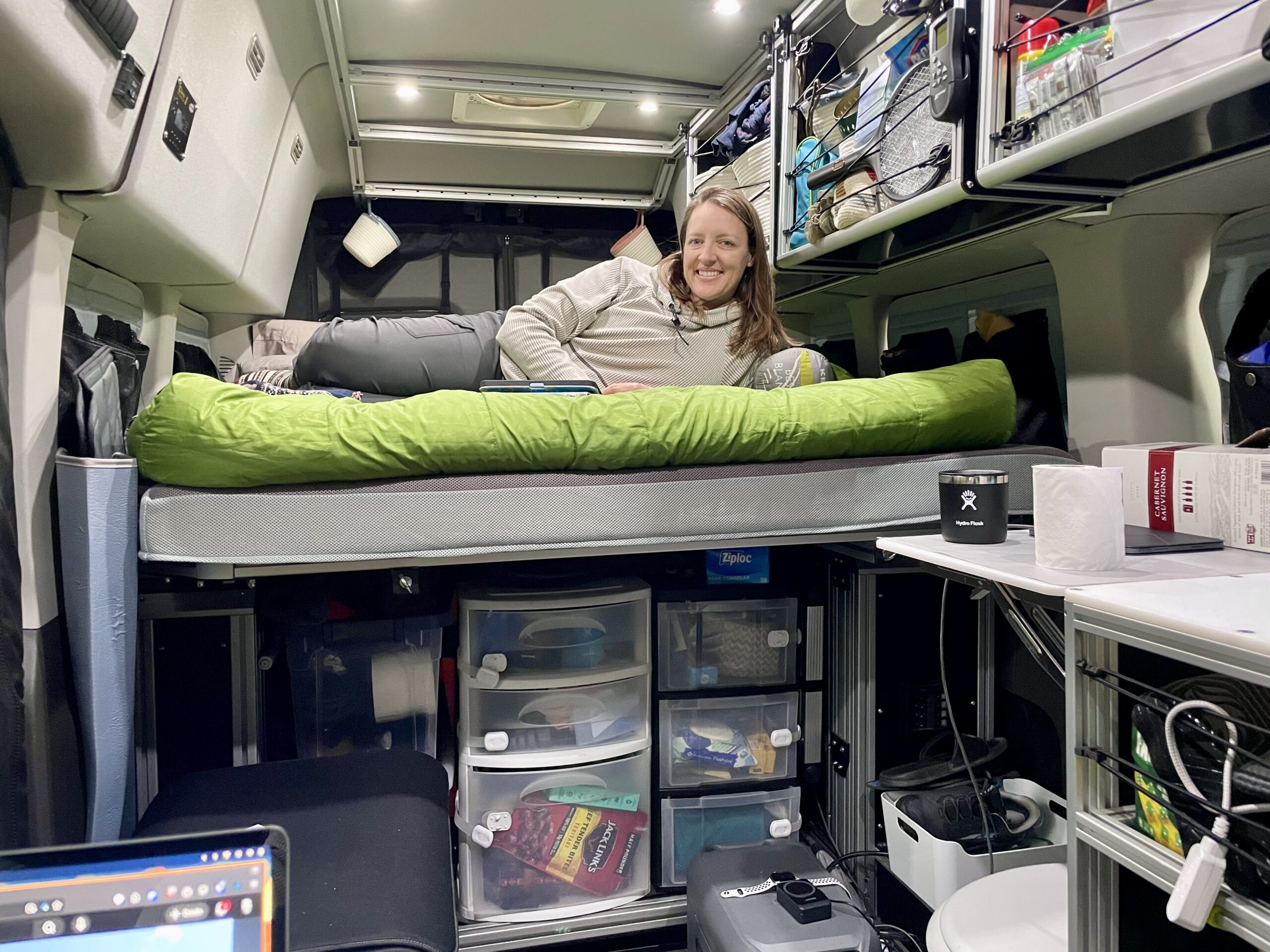
This trip was not just a scenic drive. It was also a StanVan systems test.
Just before leaving, we bought an Anker SOLIX C2000 Gen 2 Portable Power Station, 2,400W with 4,000W peak output. We wanted to see how it would fit into our real travel routine before making bigger changes to the van’s electrical system.
Our house batteries continued doing the normal house-battery things: fans, lights, fridge, and water pump. But we used the Anker for almost everything else — the water kettle, accessory charging, and, most importantly, powering the Starlink continuously throughout the trip.
It worked wonderfully.
We recharged the Anker from the inverter while driving, when the system was powered by the alternator, and also from the inverter when we were plugged into shore power. It gave us a flexible middle ground: more capacity and convenience without immediately rebuilding the van’s electrical system.
The main takeaway was not subtle. The Anker made us even more convinced that we want to upgrade the house batteries to lithium and increase capacity. Once you get a taste of having that much reliable power available, it is hard not to start mentally redesigning the whole system.
Day 2: Bottle Creek to Flaming Gorge, Red Canyon, and a Starlink Test Camp
Day 2 took us toward Ashley National Forest and the southern end of Flaming Gorge. The mood of the day was geology, canyon views, and weather that kept pushing us back into the van.
We stopped at the Flaming Gorge Dam Visitor Center and walked around the dam area. It was cold and rainy, which made the stop shorter than it might have been on a sunny day. Still, the dam is worth seeing if you are already passing through. It gives context to the scale of the reservoir and the canyon system around it.
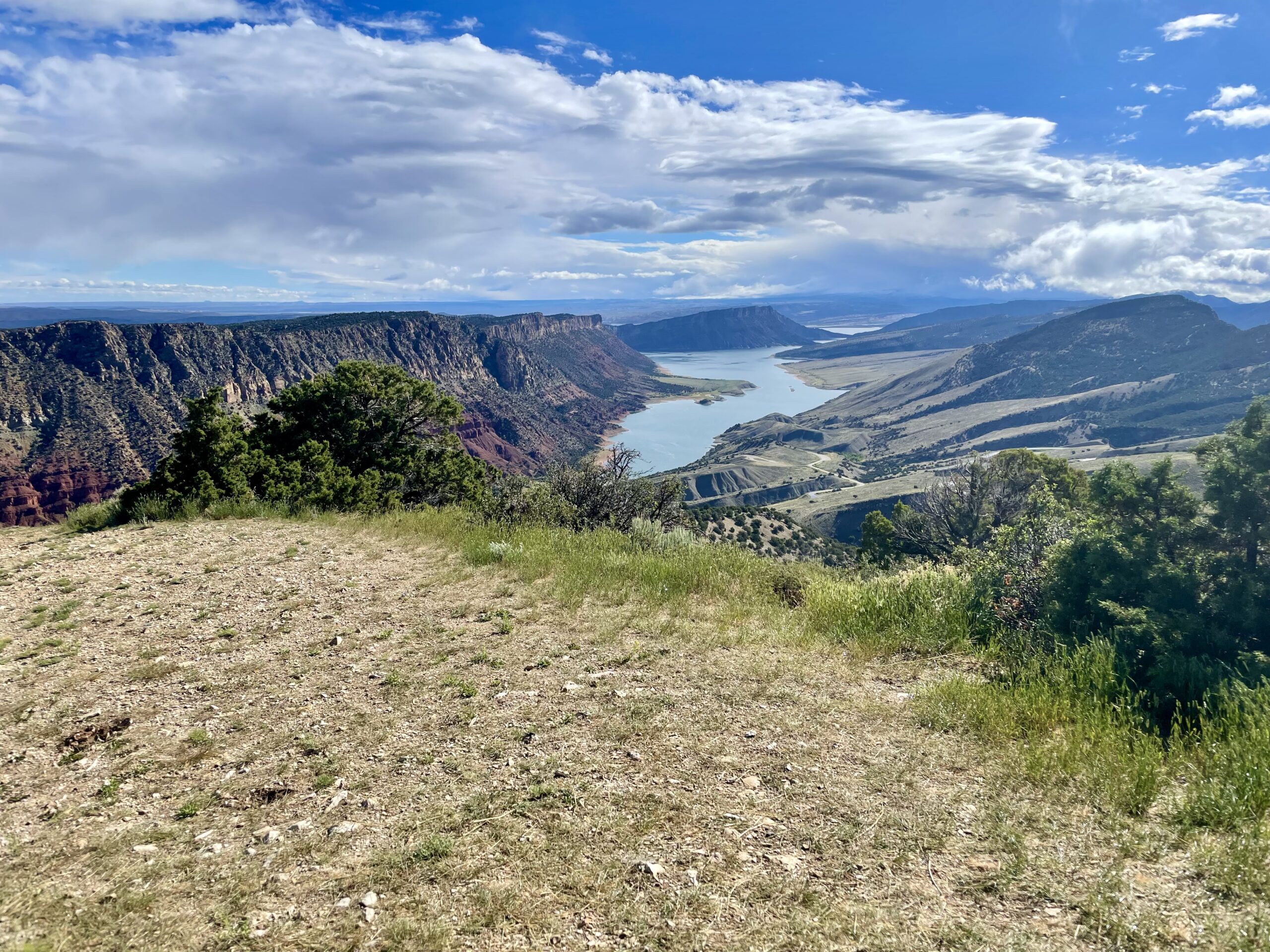
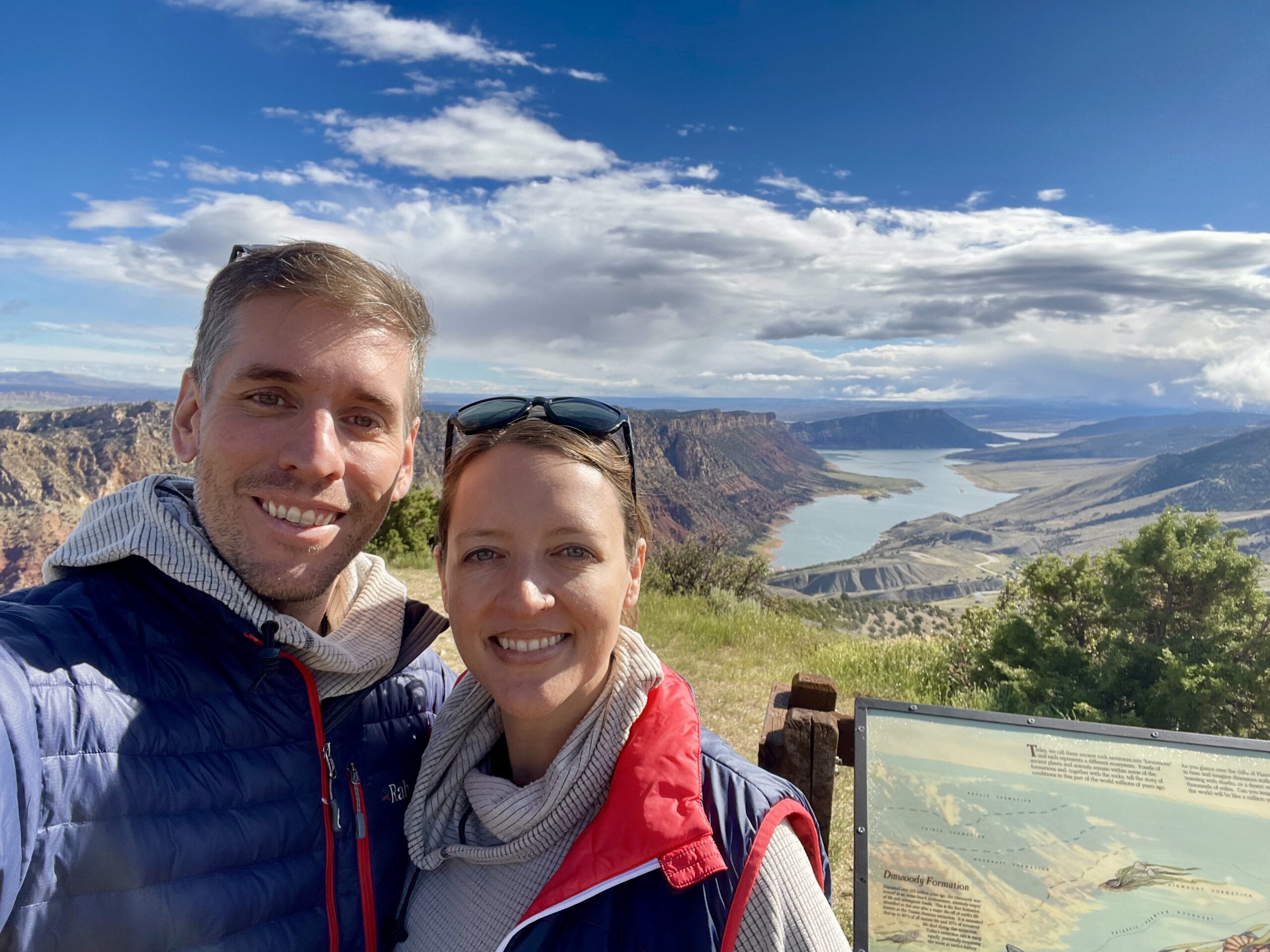
But the real highlight of the day was the Red Canyon Visitor Center.
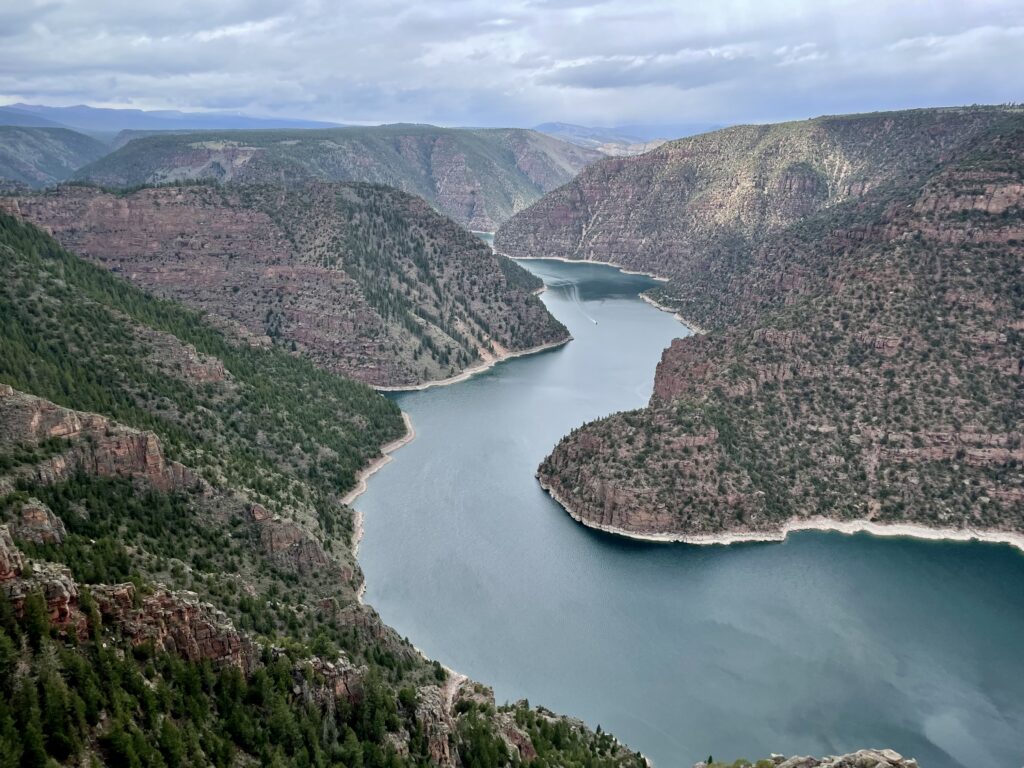
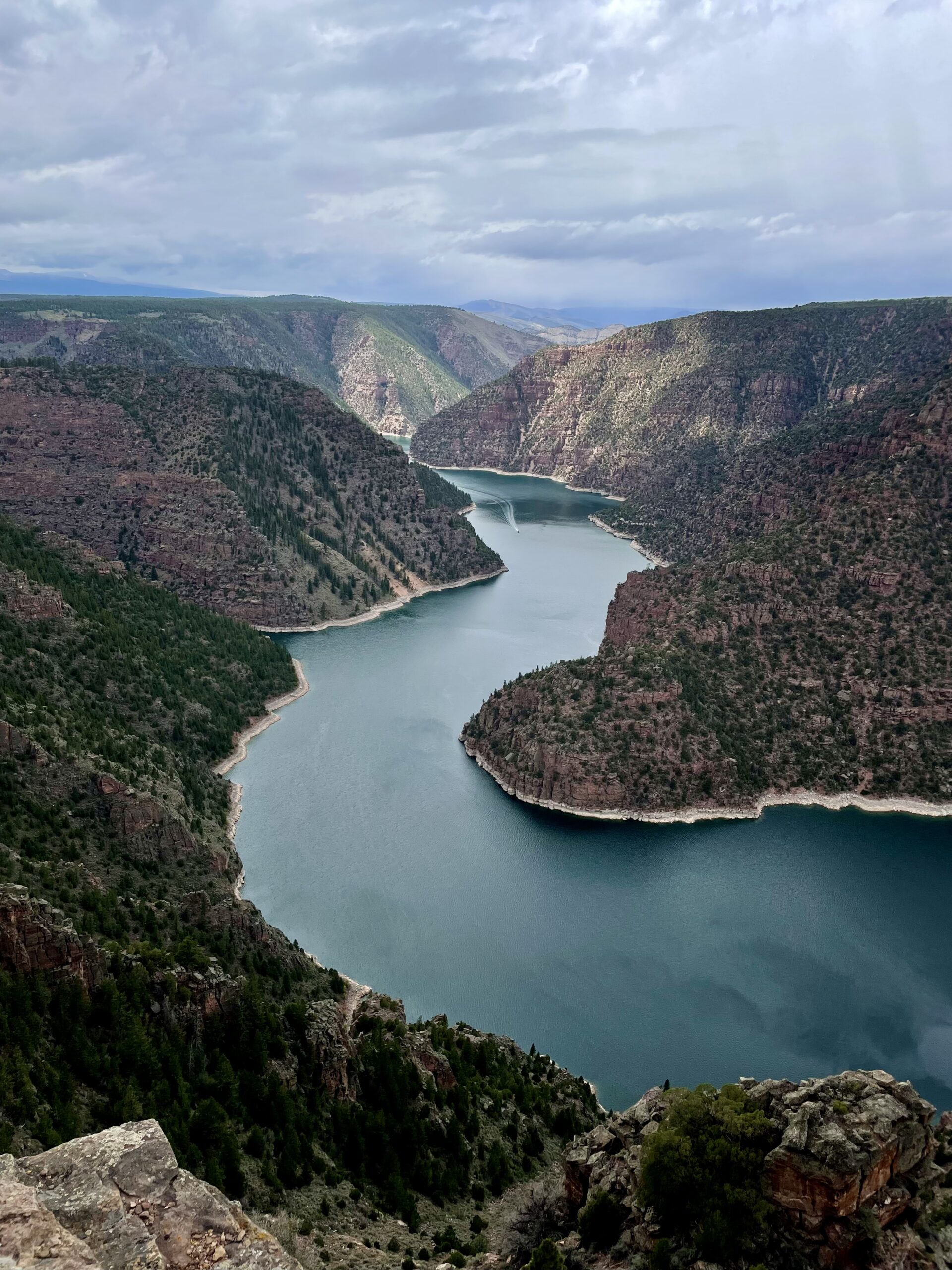
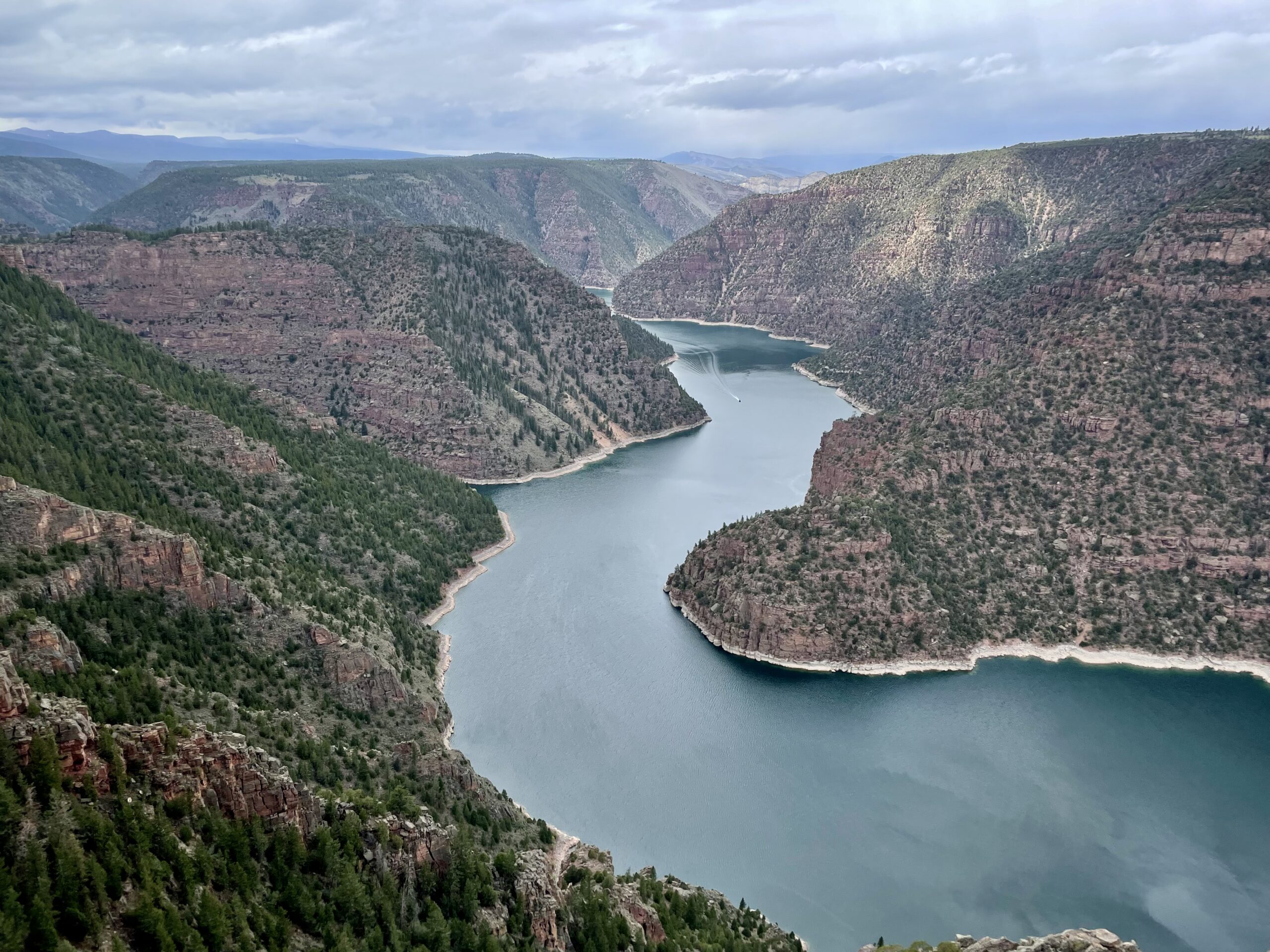
Red Canyon has the kind of view that makes you stop mid-sentence. The canyon drops away below you in red walls and deep water, with Flaming Gorge cutting through the landscape in a way that feels both massive and quiet. It is one of those overlooks where the photos are great, but they still do not quite explain the feeling of standing there.
For road-trippers, this is an easy recommendation: if you are in the Flaming Gorge area, make time for Red Canyon. Even if the weather is not perfect, the view is worth the detour.
After Red Canyon, we started looking for a camp spot. We ended up off Forest Service roads with a good view of the sky, which mattered because this was our first real test of our new Starlink Mini beyond just a quick last-minute rescue.
We had just bought the Starlink Mini and started our first month on the 300GB plan to see how practical it would be for van travel. We had already used it once at Lake Marie to solve the day-use-fee problem, and this camp became the next test: could we use it reliably from dispersed camps, would it be worth carrying, and could our power setup keep up with it?
So far, the answer was yes. Having internet at a remote camp spot is not necessary for every kind of trip, and we still want plenty of time offline. But from a practical standpoint, Starlink was immediately useful. It gave us more flexibility around camping, planning, checking weather, and staying connected without needing to aim every overnight at a town or cell-service corridor.
The important camp-selection detail is sky view. Trees, canyon walls, and obstructions matter. For this camp, we found a spot with enough open sky to make the test worthwhile. The Starlink Mini plus the Anker power station turned out to be a very practical combination.
Dinner that night was very much in the flexible vanlife category: leftovers and snacks. We were still working through the pre-trip pizza stash, plus whatever easy food made sense after a cold, wet day. One of the things we are learning with StanVan is that not every travel day needs a proper “camp dinner.” Sometimes the best meal is the one that keeps you fed with the least possible effort.
Day 3: Snowy Mountains, Sheep Creek Canyon, and Bear Lake Milkshakes
Day 3 started cold and wet.
Once we got driving, we started seeing cars covered in snow. Then we looked up at the surrounding mountains and saw a fresh coat of snow up high. This was late June heading into July 4th week, but the mountains were very clearly doing mountain things.
That is one of the biggest practical lessons from this route: do not assume summer means warm. Between the Snowy Range, Flaming Gorge, and the higher country around the route, you can get smoke, rain, cold mornings, and snow-dusted peaks all in the same stretch of trip.
Our first major stop was Sheep Creek Overlook, looking out toward Flaming Gorge. It was a strong start to the day, but the best part came next: the Sheep Creek Canyon Geological Scenic Byway loop.
This drive was one of the highlights of the first three days.
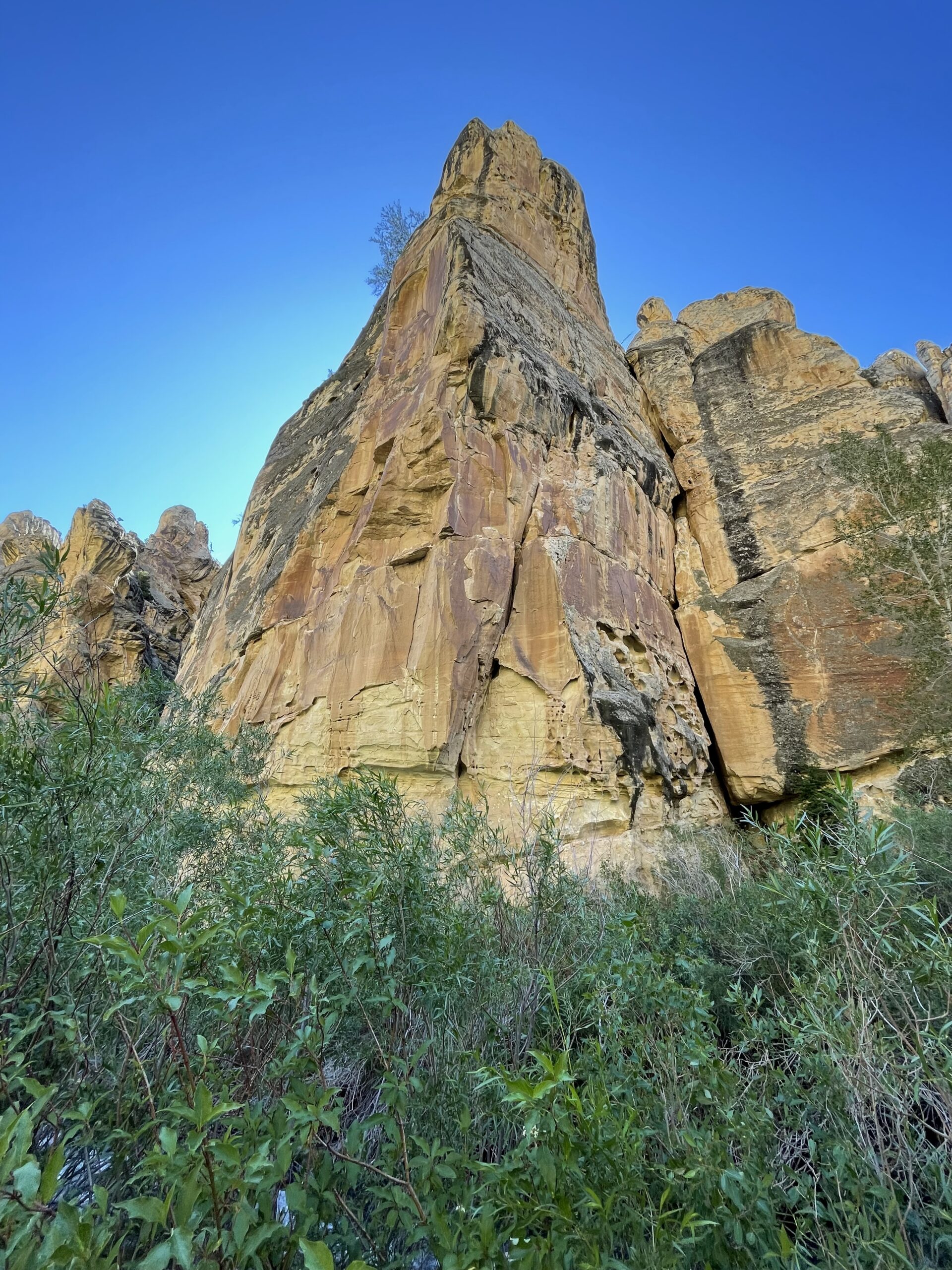
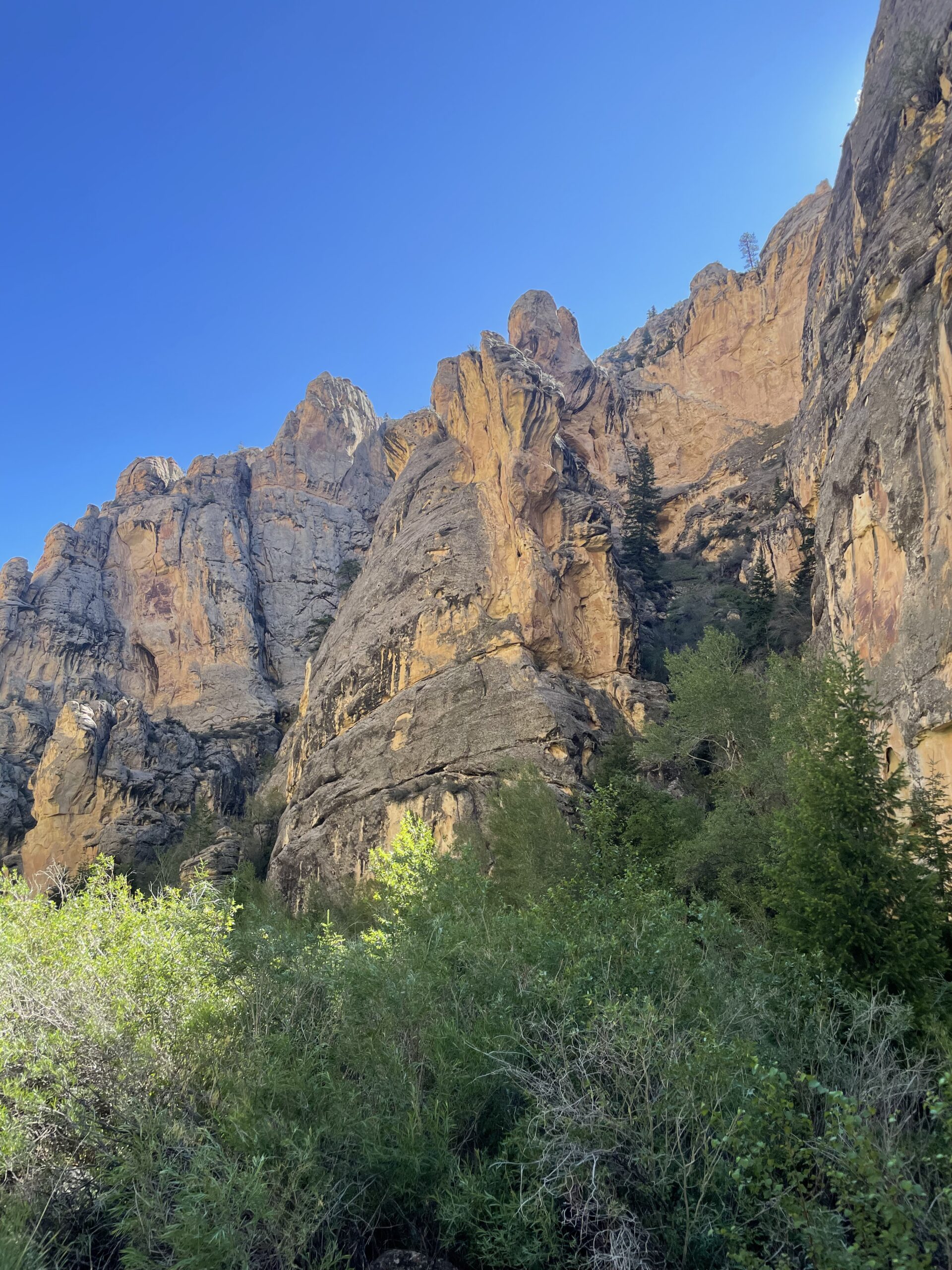
The canyon loop is beautiful in a very different way from Red Canyon. Where Red Canyon gives you the big overlook moment, Sheep Creek pulls you into the geology. The road winds through rock layers, canyon walls, and changing textures that make the drive feel like a moving geology lesson. We took Insta360 video, tons of photos, and probably stopped more than we needed to — which is exactly the point of a scenic byway.
If you are traveling through Flaming Gorge and have the time, this loop is worth building into the route. It is not just a way to get somewhere else. It is the thing you came to see.
From Sheep Creek, we continued toward Bear Lake in Utah. By that point, we were ready for a more developed stop: showers, laundry possibilities, easier logistics, and a reset after a couple of camp nights. We stayed at KOA Holiday Bear Lake Marina, which gave us exactly that kind of road-trip reset.
And this is where the bike story gets its redemption arc.
Because we did go back for the bikes, we were able to ride from the KOA to Zipz for the locally famous raspberry milkshakes. We also got fried mozzarella and sweet potato fries, because sometimes road-trip nutrition is just a loose collection of dairy, salt, sugar, and momentum.
The raspberry milkshake was the right call. Bear Lake is known for raspberries, and getting a raspberry shake after three days of driving, weather, camp food, smoke, and cold felt like the correct regional ritual.
Later, we made one more food decision.
There was a grocery store a short walk from the KOA, and at the last minute we grabbed some instant ramen cups for dinner. Easy, cheap, no cooking mess. Perfect campground food, right?
Mistakes were made.
The ramen was ridiculously hot. Neither of us is a wimp when it comes to spicy food, but this was out-of-the-ballpark spicy. In hindsight, the chicken breathing fire on the logo probably should have been a clue. We tried to salvage it with sour cream, because that was what we happened to have handy, but even that was not enough. Neither of us finished our noodles.
So Day 3 dinner became a lesson in reading the packaging more carefully, respecting cartoon poultry, and remembering that “instant” does not always mean “innocent.”
What Worked Well
The first three days of the trip gave us a pretty good shakedown of both the route and StanVan.
The route worked. Denver to the Snowy Range, then Saratoga, Flaming Gorge, Sheep Creek, and Bear Lake made for a scenic and varied three-day start. It mixed high-country hiking, hot springs, canyon overlooks, geologic drives, dispersed camping, and a developed campground reset.
The food strategy mostly worked. Pre-marinated chicken in a vacuum-sealed bag was easy and satisfying. Leftover pizza was practical. Snacks and flexible meals kept us from overcomplicating camp evenings. The fire-chicken ramen was less of a strategy and more of a personal attack.
Starlink Mini was useful. We are still testing it, but the first impression was positive. The 300GB plan gives us room to experiment without fully committing to how we will use it long-term. For dispersed camping, weather checks, route planning, and general connectivity, it already felt practical.
The Anker SOLIX C2000 Gen 2 was excellent. Using it for the water kettle, accessory charging, and continuous Starlink power worked exactly the way we hoped. It also gave us more confidence that a future lithium house-battery upgrade would be worth it.
The no-dog itinerary opened things up. We love traveling with our dog, but this particular route benefited from being able to use visitor centers, hot springs, and other stops without managing pet constraints.
The bikes were worth going back for. Even though forgetting them was a dumb start, having them at Bear Lake made the KOA-to-Zipz run easy and fun.
What We Would Tell Other Road-Trippers
If you are considering a similar Denver-to-Bear-Lake route, here are the practical takeaways from our first three days:
– Do not skip Lake Marie if the weather and timing work. It is a great first scenic stop after leaving Denver.
– Hobo Hot Springs is an easy Saratoga stop and a nice way to break up the first day.
– Bottle Creek Campground worked well for us, but check current conditions, smoke, fire restrictions, and availability.
– Red Canyon Visitor Center is one of the best views in the Flaming Gorge area.
– Sheep Creek Canyon Geological Scenic Byway deserves time. Treat it as a highlight, not filler.
– Plan for weird weather. We had smoke, rain, cold, and nearby snow in late June.
– If using Starlink, camp with sky view in mind. A beautiful site tucked under trees may not be the best internet site.
– Portable power can change the trip. The Anker gave us a practical way to run Starlink and higher-draw accessories without leaning on the house batteries for everything.
– Keep meals flexible. A loose plan works better than pretending every night will be a full camp-cooking production.
– Respect spicy ramen packaging. If the chicken is breathing fire, believe the chicken.
– If you plan to bring bikes, consider actually bringing the bikes. Advanced tip. Very technical. If you remember quickly enough, go back.
The Start of the Trip
By the time we reached Bear Lake, the trip had already given us the full range of vanlife emotions: excitement, annoyance, laughter, weather confusion, scenic overload, and the satisfaction of realizing that even the imperfect parts make the story better.
We did not execute the plan perfectly. We forgot gear, briefly. We adjusted to smoke. We changed meals based on energy. We tested new equipment in real conditions. We took the scenic loop even when the weather was moody. We got the raspberry milkshake. We were defeated by noodles.
That feels like the right beginning for StanWilds.
Next up: continuing the trip beyond Bear Lake toward Idaho, lava fields, mountain scenery, and whatever else StanVan gets us into.
Wow, great start to her another great adventure. I can relate to forgetting stuff but hey, lots of moving parts when you are preparing for deployment.
Thanks for sharing